Despite people in Canada/New England feeling a strong pride and sense of ownership surrounding moose,Europeans have the exact same moose. English speakers completely fucked up the naming conventions for the animal because we fuck EVERYTHING up.
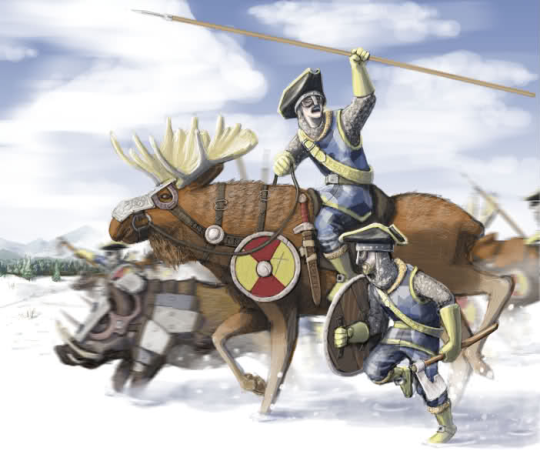
The Eurasian elk is the exact same animal as the moose. It is Alces alces. Here is a depiction of a Swedish soldier riding a moose into war in the 1700s.
Figure 1. The Swedish army used moose as cavalry animals at various points in history. I don’t know what the armored boar is all about.
However, the English caused a lot of confusion by originally calling it an “elk.” This comes from the older English word eolc/eolh, which shares roots with elhaz/algiz, which, if you know your runes, is the antler-looking rune ᛉ.
So the English had moose, they just called them elks. But there haven’t been any moose in the UK since the Bronze Age, so the English just started using the word “elk” to apply to “really big deer” – and they forgot that there was a specific animal they used to call “elk.”
Today, modern people from the United Kingdom have overwritten their own understanding of “elk” with Elk (USA), which are wapiti (Cervus canadensis).
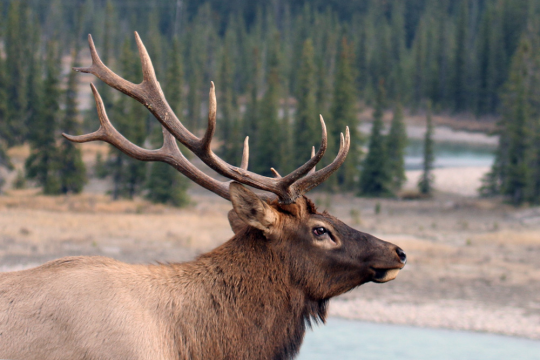
This is a wapiti, which everyone calls “elk” now:
Figure 2. The wapiti, or elk
(Cervus canadensis)
“Hmmmmmmm,” British people may be saying right now. “That is a vaguely familiar animal. I feel like that is a STAG. I feel like it needs to be selling me a bottle of whiskey.”
YES. The wapiti is very similar to the UK’s red deer. This is what UK people call a “stag” :
Figure 3. A stag, or British red deer (Cervus elaphus) – actually slightly less red than the wapiti.
The explanation for this is that the UK colonizers found the wapiti in the USA, but the problem was that red deer were rarely seen by the common people at that time, so they thought they were Unusually Big Deer. And so the colonizing bastards said “Hey, what are these, Nigel?” and Nigel was like “IDK, stags?” and they were like “Yeah but they look really big, don’t they?” and Nigel was like “well, what about calling them big deer, then” and they called them “elk” which at that point had come to mean “big deer” in English.
Cervus elaphus (name meaning: deer deer) and Cervus canadensis (name meaning: Canadian deer) are very similar animals, and many people muddy the waters by calling Cervus elaphus an“elk.” The word ran all around the world, and American influence meant that it is losing its own definition in its own land.
Cervus canadensis
are also found in Asia, where the subspecies are called wapiti, from the Shawnee word meaning “white rump.” This is to prevent confusion. If you see one in Mongolia, you must properly call it a “Canadian deer, aka ‘white butt,’ from the indigenous North American word” to prevent this kind of confusion.
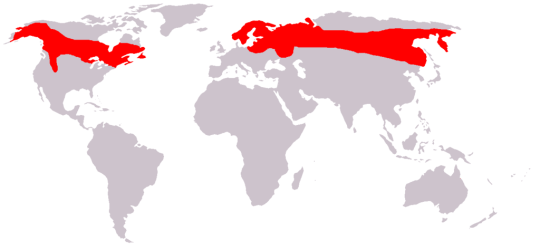
Figure 4. The global range of
Cervus canadensis, the wapiti, or elk.
Okay. Enough about what happened to the word “elk”. The point is that other European countries have reasonable amounts of moose, which they call elk. The “Eurasian elk” is Alces alces, the moose.
Figure 5. A Swedish army representative wearing Swedish flags and riding a Swedish moose. ALSO, SOMEHOW, THE MOST CANADIAN THING EVER
So when the English settlers colonized Canada and New England, they continued their long history of fucking the fuck up. But in the middle of this, they saw Eurasian elks, had no idea what they were, and went with the local Algonquin word “moose.”
They also called the same moose “elk” at the same time, and went into a slight confusion where they tried to differentiate them into “grey moose” and “black moose” and “black elk,” but when the dust settled, the world was left with British-colonizers-turned-Americans applying random names to everything, and winning. Wapiti are now called elk, and now red deer are also kind of elk. Eurasian elk are now moose. Wikipedia attempts to explain the moose fuckups here and the elk fuckups here.
The word “moose” is Algonquin in origin. This is why it doesn’t pluralize like English words do. In English, the plural of “goose” is “geese” and thus many people feel that the plural of “moose” should be “meese.” However, “moose” is not an English word. If you wanted to treat it as one, you could remember that moose are hoofed animals of a specific class, and you could follow the rules already laid down for moose relatives: The English plural of elk is elk. The English plural of deer is deer. The English plural of sheep is sheep. You can call multiple moose “meese” if you want to. But that’s why it is the way it is.
Figure 6. The global range of moose, or Eurasian elk.
So there you have it. Moose are an important, scary and hilarious part of Canadian/New Englander culture, but they aren’t just ours – we share them with Eurasian cultures too.
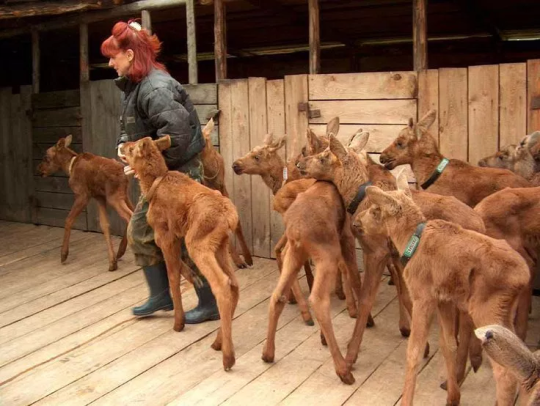
Figure 7: a Russian moose farmer with a promising crop
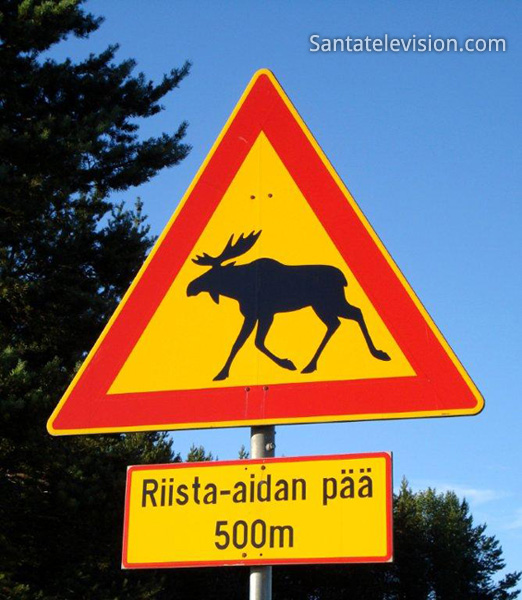
Figure 8: Finnish people provide a dark warning. “Hirvikolari” is a specific Finnish word describing a road accident involving a moose. There are many dashcam videos of hirvikolari on the Internet.
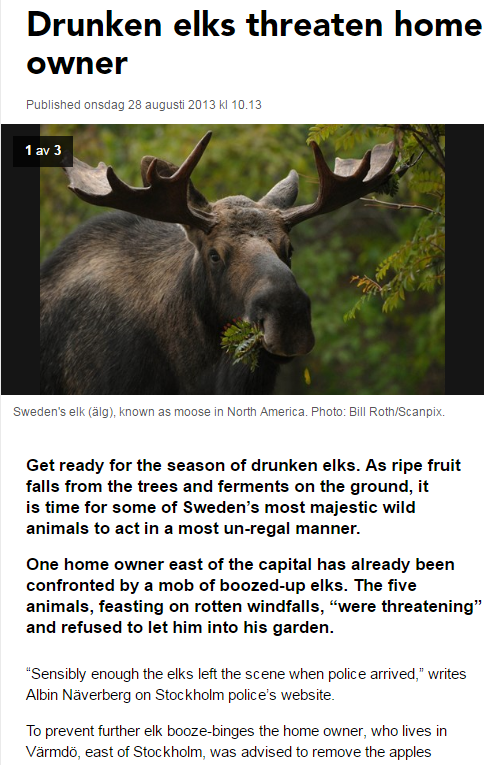
And now think about all the amazing Moose News you have access to now! You can now enjoy stories of moose destruction, mayhem and general fuckery SO MUCH MORE when you realize they aren’t about deer:
Figure 9: every line of this story is perfect?
Actually, you know what?
That’s still the most Canadian thing ever.
This is perfect. But I have a burning question!
Can I go to that moose farm and pat the baby moose, thereby fulfilling what I previously thought was a totally impossible dream.
Your dream is possible! The Kostroma Moose Farm apparently does take visitors, but I think it would be difficult to get to and they’re a professional farm, so they might not want people to pat the calves. Sumarokovskaya Elk Farm is also in Russia and apparently lets you pet the moose.
HOWEVER. There are a LOT of “elk parks” in Sweden with special tame moose, including babies, and visitors can pat them. It’s a whole tourist thing. You can google for yourself (the Swedish word for elk is älg.)
Caveats apply – babies are available in spring/summer and the adults may be too aggressive in the rutting months of autumn to be patted.
IMAGINE PATTING THE BABY MOOSE.
A stag is literally just a male deer. A male fallow deer is also a stag, for instance
Yes and no! I don’t know how much you want to fight this incredibly tiny and pointless point, but a male fallow deer is actually more commonly a “buck” and his lady is a “doe.” The smaller deer – American white-tails and roe deer generally – follow the convention of bucks/does. Stags are PARTICULARLY red deer and larger cervids.
Red deer males are harts or stags, unless they are young heraldic animals, in which case they are brockets. The ladies are hinds. In moose, a boy is a bull and a female is a cow and a baby is a calf.
But it’s a totally pointless point to argue. You can call any male deer a stag if you want to and be correct, just like you can call any four-legged equine a “pony,” or any canine a puppy. It works as a word and people will 100% know what you mean, so what’s the point of nitpicking? You mean “a boy one of those long legged hoofy things.” Why care? We are all dying in our fleshy bodies and communication is already so hard.
Call it a stag. Call it a puppy. Call it a pony.
But just be warned that some snotty character will point out to you that “ACTUALLY, it’s a HORSE,” and you’ll be like “…It is a bootiful pony,” and they will shriek “IT IS SIXTEEN HANDS HIGH.”
It will still be a pony to you (adorable equine thing) even if it isn’t technically a PONY (an equine up to 14.2 hands high, or a specific breed such as Welsh Pony.)
The demolition of a power plant created this human silhouette.
Also pictured: A nameless elder god of fire and ruin being woken from its artificial slumber. No longer are they able to be drained of their ancient power for the benefit of fragile humanity, we who are dependent on our god-eating machines. The smoke clears as they ascend. We are running out of gods.






 kototyph