1. Describe yourself how you would describe a character you’re introducing
2. Is there any specific ritual you go through while/before/after your writing?
3. What is your absolute favorite kind of fic to write?
4. Are there any other fic writers you admire? If so, who and why?
5. How many words can you write if you sit down and concentrate intensely for an hour?
6. First fic/pairing you wrote for? (If no pairing, describe the plot)
7. Inspiration, time, or motivation. Choose two.
8. Why do you choose to write?
9. Do you ever have plans to write anything other than fic?
10. What inspires you the most?
11. Weirdest thing you’ve ever written/thought about writing/etc.?
12. A fix you wish you had written better, and why?
13. Favorite fic from another author?
14. Your favorite side pairings to put in?
15. Your guilty writing pleasure?
16. Do you have structured ideas of how your story is supposed to go, or make it up as you write?
17. Would yo describe yourself as a fast writer?
18. How old were you when you started writing?
19. Why did you start writing?
20. 4 sentences from your work that you’re proud of
I can’t BELIEVE I haven’t plugged this yet, because it’s so legit.
@jstor just sealed itself in my heart as the coolest resource ever by combining my two greatest loves – Digital Humanities and Shakespeare – to create an AMAZING site called Understanding Shakespeare.
It works like this (hold on to your seats, this is so cool):
Say you reach a line in a Shakespeare play where there’s a reference or symbol you don’t understand and/or would like to know more about. Usually, it would take a substantial amount of time to figure out the meaning, find the key theme, search through research databases, and maybe hit something that references your line.
But no longer!
Because with Understanding Shakespeare, you can go to the line and look at all the scholarship published on JSTOR that features or references to it! Oh my god!!!
An example:
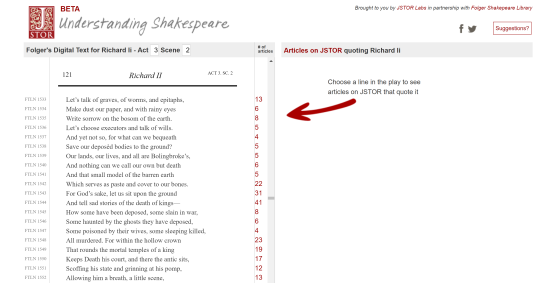
So I really love Richard II’s “graves, worms, and epitaphs” speech, it’s one of my very favorites, and I’d love to learn more about it and the symbols of death and historical references contained within it. So I go to the line in Richard II:
Click on the first line and voila! There’s a ton of articles that quote this line, and several of them look really interesting and relevant!
So whether you’re looking for more information on a line for research or performance understanding, or you just like being sucked down the addictive rabbit hole of reading JSTOR articles all afternoon (me), Understanding Shakespeare is AWESOME and a resource you should totally take advantage of.
OK friends – reblogging this again because I just talked to our Labs team (who made Understanding Shakespeare) and they are recreating this resource with other authors/texts and want to hear from you! What work do you want to see this replicated for? Any authors where this would help your research??? Let me know by reblogging and leaving a comment.






 kototyph